
![[Poas]-Patron.png](https://static.wixstatic.com/media/07a638_5883e78e27b64d4790770da0361700d6~mv2.png/v1/fill/w_100,h_56,al_c,q_85,usm_0.66_1.00_0.01,enc_avif,quality_auto/07a638_5883e78e27b64d4790770da0361700d6~mv2.png)
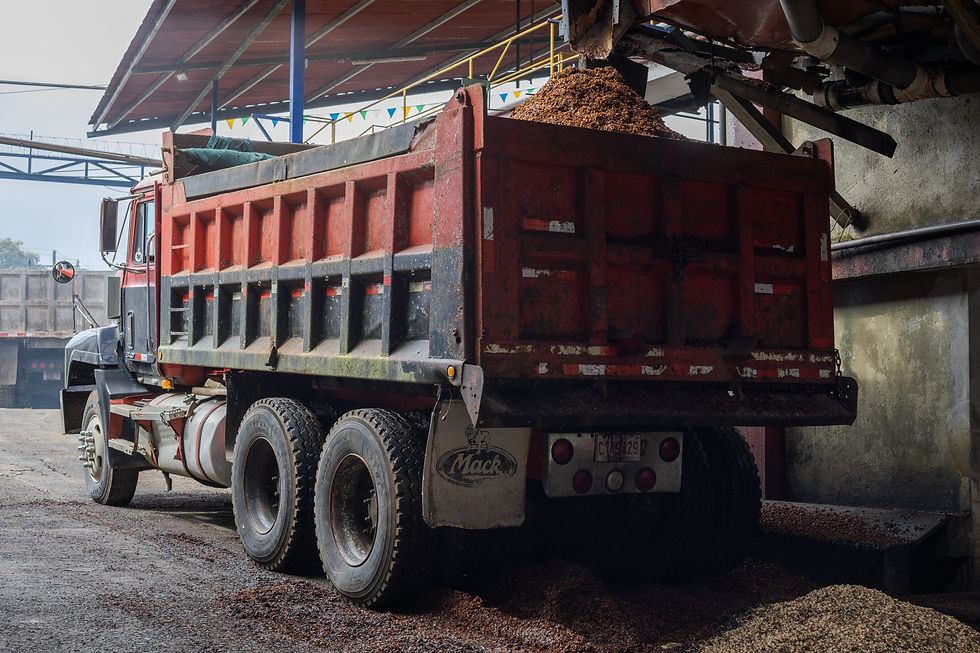
Residue Streams Disrupted
Wet biomass accumulates quickly and becomes costly to handle. Left unmanaged, it drives emissions and locks operations into expensive, carbon-intensive energy.
.jpg)
Our Mission
Regenerative agriculture, powered by residues
Poás Bioenergy builds carbon-negative systems that convert wet agricultural residues into clean process heat and biochar—helping producers reduce handling costs, cut emissions, and return carbon to soils for long-term storage.
Agriculture should run in a loop, not a line
In a healthy system, residues become on-site energy and biochar returns value to soils. But when residues are discarded and energy is bought separately, costs rise and emissions stack—season after season.

.jpg)
2 RETURN CARBON TO SOIL
Biochar that supports healthier farms
Biochar is a stable form of carbon that can improve soil structure, water retention, and nutrient cycling. We produce biochar as a core output—so value returns to the farm instead of leaving the system.
1 CLEAN UP RESIDUE STREAMS
Turn messy biomass into a managed input
Wet residues build up fast and are costly to move, store, and control. We help sites stabilize residue handling by converting these streams into a consistent, usable feedstock for on-site conversion.
.jpg)
.png)
3 DECARBONIZE PROCESS HEAT
Reliable energy from what you already have
Instead of purchasing carbon-intensive fuels, our systems convert residues into syngas for process heat (and optional power). That means steadier operations, lower exposure to fuel volatility, and a cleaner production footprint.
Our solution
We have developed a new gasification technology that takes in the inconvenient biomass and produces high energy density syngas and biochar. The syngas can be used for heat energy or run through a generator to provide cheap, reliable, clean energy.
The biochar can be added to crop soil where it works as both a carbon sequestration technology and a fertilizer amendment that improves the health and production of crops.


Our Partners
![[Poás-Bioenergy]-Fondo.jpg](https://static.wixstatic.com/media/561513_750f465004af4944b209292c3cb6a0fe~mv2.jpg/v1/fill/w_100,h_56,al_c,q_80,usm_0.66_1.00_0.01,enc_avif,quality_auto/561513_750f465004af4944b209292c3cb6a0fe~mv2.jpg)